
Sarah Hess’ Botanical Prints Bring Nature Indoors
The Barrington artist found her niche after spending years in nature and the classroom

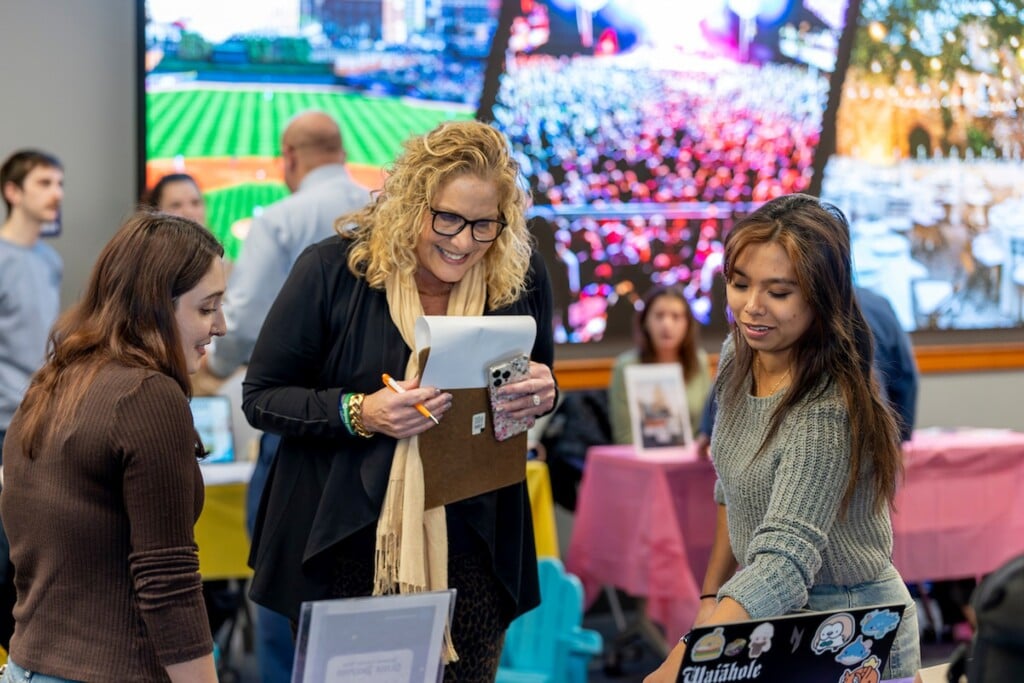
Sarah Hess with her work.
Sarah Hess is a Rhode Island girl. Raised in Glocester by a musician father and dollmaker mother, she’s never been a stranger to artmaking. Having grown up in a rural area, she was always drawn to nature and loved exploring the woods, a pastime that continued into adulthood.
She crafts colorful botanical block prints with vivid colors, strong lines, and a sense of life. Her collections include mushrooms and wildflowers — and their very important pollinators! — and fruits and flowers from her own garden.
Hess credits growing up in nature as a huge factor in her art practice. She’s drawn to wildflowers, the things that people don’t plant but that spring up on their own. “I like to say, ‘Wildflowers not weeds,’ because that’s what they are; they’re beautiful,” says the Barrington resident.
Not all of her inspiration comes from wild plants, however. She collects and dries specimens whose unique forms and shapes interest her, and they often end up in her work. She loves fuchsias, for example, for their robust forms, noting that they must be carefully cultivated to flourish in Rhode Island’s climate.
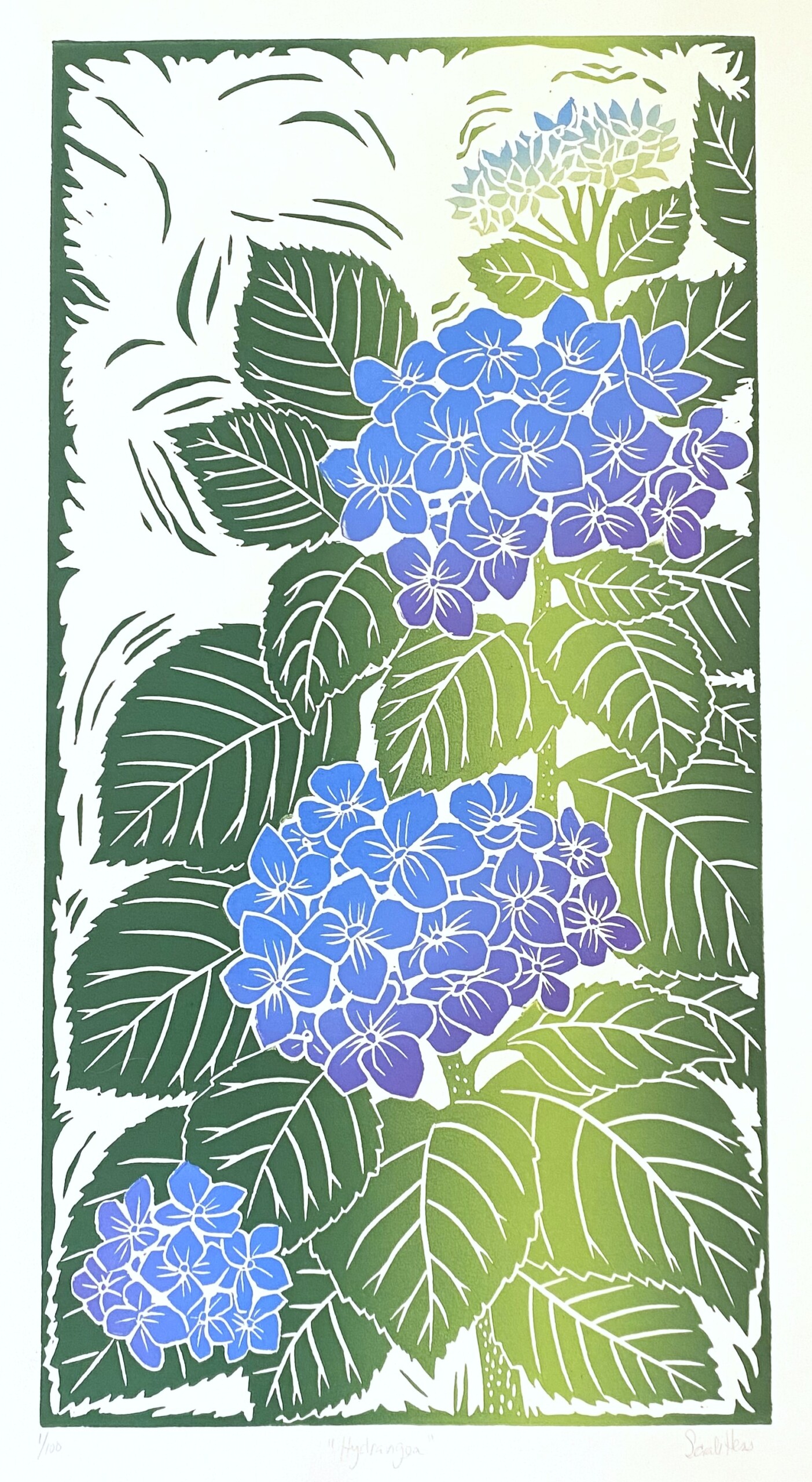
She also seeks inspiration from the American Arts and Crafts movement of the late 1800s, and loves perusing vintage botanical illustrations. She admires the quality of print and linework that came out of that artistic period, saying it proves that the combination of her two loves, printmaking and plants, has been consistently present in the art world.
Hess wasn’t always a full-time artist. She worked as an elementary school art teacher for several years after graduating with a dual degree in art education and studio art.
Although she found it rewarding, her career didn’t leave her any time to create. “I’m always happiest when I’m making something,” Hess says.
After her daughter was born, she stopped teaching full-time and had the time to create that she’d been craving. That’s when her work as an artist really started to evolve, and after her daughter went to kindergarten, her practice blossomed into a career.
“I didn’t start off doing what I do now,” Hess says. “I tried doing pottery and jewelry design at first, and I tried to start that as a business, but it wasn’t really working. When I started printmaking, specifically block printing, that’s when I found my niche. That’s when it really clicked as a business.”

Over the summer, Hess started practicing cyanotyping, a photographic process that doesn’t involve a camera. All you need is cyanotype solution, a surface, things you’d like to make prints of, and the sun.
“I like different mediums — I’ve obviously dabbled in various ones — and I was getting that itch to try something new,” Hess says. She spent the summer playing in her garden and picking different plants to experiment with. “Block printing, my main practice, is very planned, but this is more spontaneous,” she says. “There’s this magic of washing the water away and seeing the image appear.”
She’s been collecting botanicals and storing them for future use, and then pulling them out to print with them. People have responded positively to her cyanotypes at art markets, and she’s sold more prints than expected. “It’s really fueled the fire in terms of making things,” she says.
Hess sells her work on Etsy, at Made in Warren, an artist cooperative on Main Street, and at markets and art fairs around New England.
“When I stop and think about it, it’s amazing that people want to purchase my prints,” she says. “They’re not providing any real purpose or function like jewelry or pottery or a tote bag. People just want to put them on their walls. I’m so grateful that people want my work just to look at it and appreciate it.”
Market season usually runs from April to December, but that’s not slowing Hess down. She’s starting 2027 by teaching a series of adult workshops, starting with a botanical block printing class at the Wickford Art Association in January, with a fabric printing workshop to follow.
It’s been a long process to finding her way as a full-time artist. It’s something you must have a passion for, she says.
“It will take time; you can’t do it on the fly,” she says. “You’ll spend a lot of time [creating], so find something that’s doable for your lifestyle, have patience for new things, and don’t give up after the first pitfall.”
Eventually, she says, you will find your tribe.
“What it takes is to keep chugging along and unabashedly creating, and often your community will find you.”